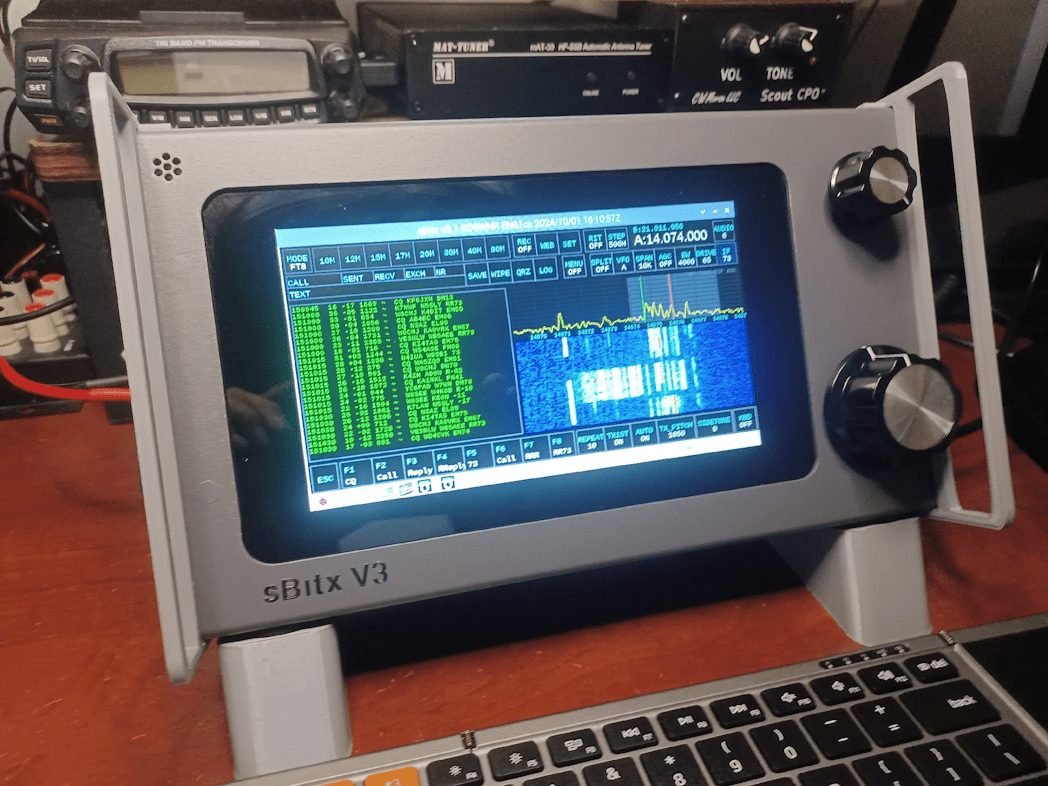
The sBitx V3 is a powerful, software-defined transceiver designed by Ashhar Farhan (VU2ESE). It builds upon the previous sBitx versions, offering a Raspberry Pi-based interface, a touchscreen display, and a user-friendly Linux environment for digital modes, logging, and radio control.
Pros:
🔹 All-in-One SDR Solution
- Includes a built-in Raspberry Pi, touchscreen, and pre-installed software for digital modes like FT8, JS8, and FLDigi.
- No need for an external computer for most operations.
🔹 Linux-Based Open-Source Platform
- Can be customized and updated with new software features.
- Encourages experimentation and development.
🔹 Multi-Band Coverage & Decent Power Output
- Covers HF bands (80m–10m) with around 40W output on lower bands and slightly less on higher ones.
- Suitable for both QRP and mid-power operation.
🔹 User-Friendly Interface
- Large color touchscreen with an intuitive UI.
- Supports waterfall display, logging, and digital modes directly.
🔹 Good for Digital & CW
- Internal sound card eliminates the need for external interfaces for FT8 and other digital modes.
- Low latency and good stability for CW operation.
Cons:
🔻 Still Maturing
- Some software quirks and bugs, though updates are frequent.
- May require occasional tweaking for optimal performance.
🔻 Not as Refined as Commercial SDRs
- Filtering and receiver performance, while decent, may not match higher-end SDRs like the Icom IC-7300.
- Some users report occasional RF interference and signal artifacts.
🔻 DIY & Tinkerer-Friendly, but Not Plug-and-Play
- While prebuilt units are available, users may need to troubleshoot software or make minor hardware adjustments.
Best Use Cases:
✅ Portable HF station – A self-contained setup without needing a PC.
✅ Digital mode operation – FT8, JS8Call, and FLDigi work straight out of the box.
✅ Home station for SDR enthusiasts – Offers a balance between DIY experimentation and ready-to-use functionality.
Verdict:
The sBitx V3 is a unique, all-in-one SDR transceiver that bridges the gap between open-source experimentation and practical ham radio use. It’s a great choice for those who enjoy SDR technology and digital modes but want an integrated, Linux-powered system. While not as polished as commercial SDRs, its versatility and hackability make it an exciting rig for tinkerers and portable operators.





 New Ham Blog