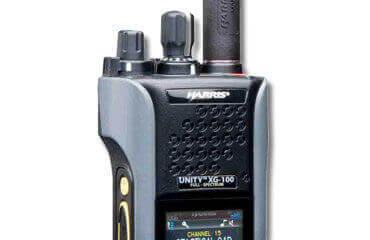
In the world of amateur radio, versatility, durability, and performance are key. While many operators rely on consumer-grade transceivers, a growing number are turning to professional-grade equipment for enhanced capabilities. One standout in this category is the L3Harris Unity XG-100P, a multiband portable radio originally designed for public safety and military use. Here’s why it’s worth considering for your amateur radio toolkit.
A Brief History of the XG-100P
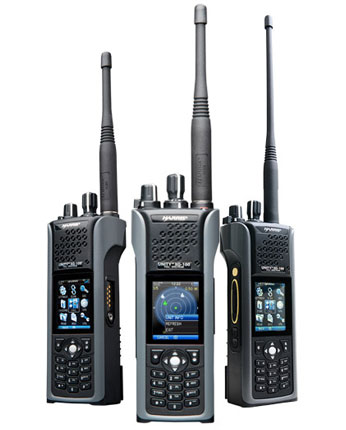
The Unity XG-100P was introduced by Harris Corporation in the early 2010s, before the company merged with L3 Technologies to form L3Harris Technologies in 2019. Designed to meet the demanding needs of first responders and defense personnel, the XG-100P was built with a software-defined architecture, allowing for future upgrades and customization without hardware changes.
The XG-100P was introduced by Harris Corporation’s RF Communications Division around 2009, as part of their Unity product line. The XG-100P was developed in response to:
- Post-9/11 interoperability challenges among emergency services.
- The need for a single device that could replace multiple radios across different bands.
- Growing adoption of P25 digital standards in public safety communications.
Harris aimed to create a future-proof platform that agencies could rely on for years, with software upgrades keeping pace with evolving standards. Manufactured in the United States, the radio quickly gained traction among agencies requiring secure, interoperable communication across multiple bands and systems.
APCO P25 (Project 25), is a digital radio communications standard developed for public safety and emergency services, designed to ensure interoperability between different agencies and manufacturers. It was developed by the Association of Public-Safety Communications Officials (APCO) in partnership with government and industry. But, it's also used by amateur radio operators who enjoy experimenting with digital modes.
Features That Set It Apart
The XG-100P is packed with features that make it a top-tier choice:
- Multiband Operation: Covers VHF (136–174 MHz), UHF (380–520 MHz), and 700/800 MHz (762–870 MHz).
- High Power Output: Up to 6W on VHF, 5W on UHF, and 3W on 700/800 MHz.
- Dual Microphones: With noise suppression and AMBE+2 vocoder for crystal-clear audio.
- Built-in GPS and Bluetooth: For location tracking and wireless programming.
- Front Panel Programming (FPP): Allows direct channel input from the device (if enabled).
- Rugged Design: MIL-STD-810G certified for durability in extreme conditions.
- Battery Life: Up to 10 hours on a standard duty cycle.
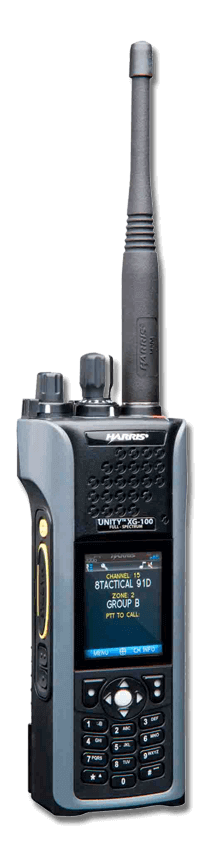
XG-100P Controls

Where It’s Been Used
The XG-100P has seen widespread use in:
- Law enforcement
- Fire and EMS
- Military operations
- Disaster response teams
Its ability to operate across multiple bands and encryption types makes it ideal for multi-agency coordination and tactical deployments.
Used Market Pricing
While new (unused) units are rare and expensive, the used market offers more accessible options; Price will vary greatly by condition, features installed, and accessories included.
- Basic units (radio only): $350–$800
- Fully equipped units: $700–$1,200
- Refurbished with warranty: $1,200+
Compared to other professional radios like the Motorola APX 8000 (often $4,000+), the XG-100P offers exceptional value.
What to Look for When Buying
The average Ham won’t use or need many of the features this Radio is capable of, such as P25 Phase 2 (trunking) or any of the encryption options. If you are in a job that has you carrying a radio, and you need these types of features, check with your Administrator first. If you’re like me, and just want if for “conventional” FM analog and P25… A basic Feature Set should suffice.
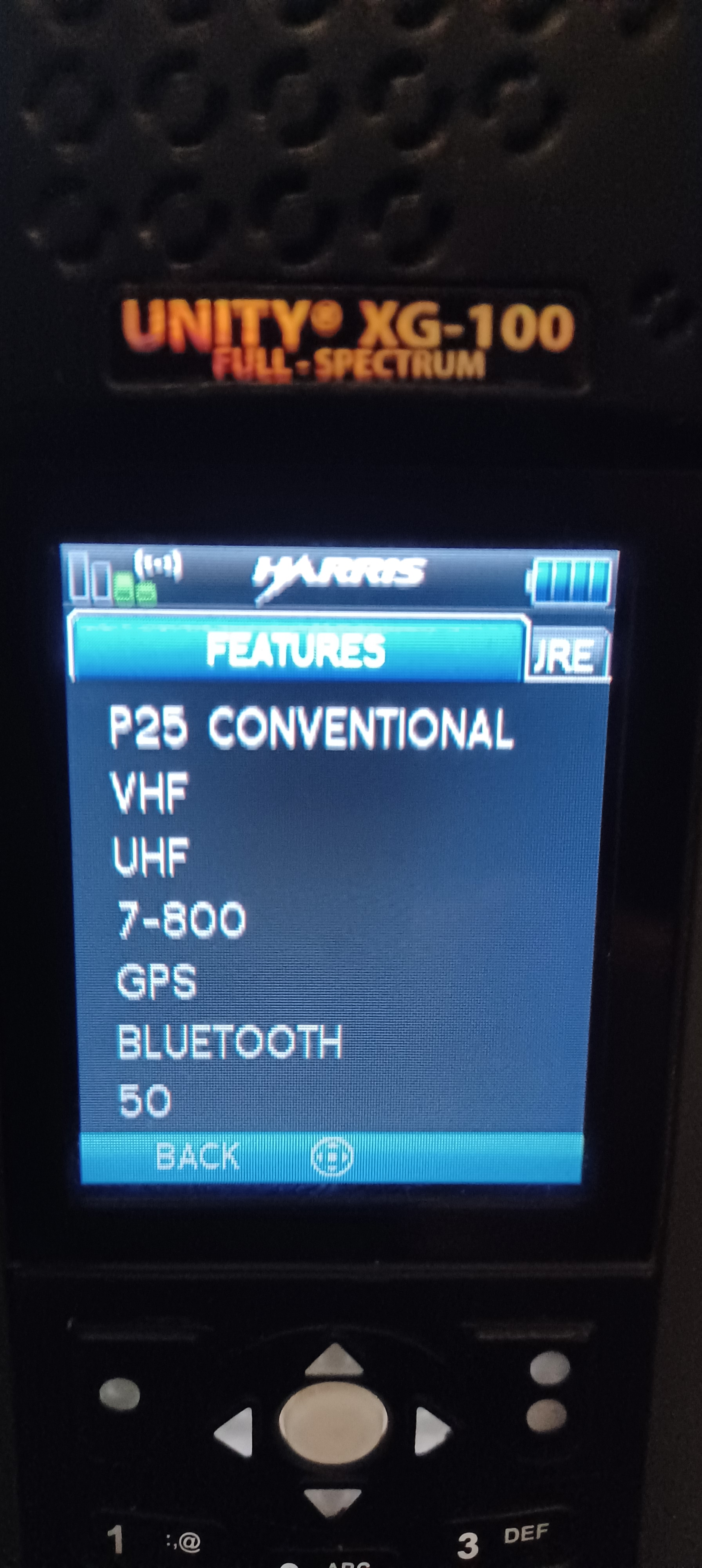
I wouldn’t buy one of these without a look at the Features Set. If buying online… The Features should be displayed by the Seller in the ad; If not beware.
Most of the Surplus XG-100P radios in the market were used by Public/Emergency Services organizations on APCO P25. Many of these have their Wide-Band operation disabled to comply with FCC Part 90 regulations limiting Public Service Frequencies to Narrow-Band Only. Ham Radio requires Wide-Band FM.
Do not purchase an XG-100P with Feature “58 – WIDEBAND DISABLED”; These will not work well for Amateur use in FM Analog.
Programming the XG-100P: RPM Software Essentials
To program the XG-100P, you’ll need Radio Personality Manager (RPM), Harris’ proprietary software suite.
Harris RPM is past End-of-Life and no longer available or supported by Harris. Deprecated versions of RPM can be found through alternative sources. The latest version is R14C05; The latest compatible Firmware for the XG-100P is XLPRO6T02.

The XG-100P is not compatible with RPM2, the latest Harris programming software.
Capabilities
- Create up to 10 Mission Plans (Personalities) with 1,250 channels each (12,500 total).
- Define shared Personalities for reuse across multiple radios.
- Support for analog FM, P25 Phase 1 & 2, EDACS, and ProVoice systems.
- Wireless programming via Bluetooth or Over-the-Air Programming (OTAP).
It may be confusing... In the Harris world, the term Mission Plan and Personality are used interchangeably. The Mission Plan is what Motorola and others call a Code Plug. Harris saves the Mission Plan (code plug) in a file called a Personality (*.prs).
How to Program
- Install RPM on a Windows PC.
- Connect the radio via USB cable (model 12082-0410-A1).
- Create a mission plan with channels, systems, and user settings.
- Upload the plan via USB or Bluetooth.
- Enable FPP if desired for field programming.
Note: If enabled, the radio can be fully programmed over Bluetooth; No cable required. A Programming Cable is required for Firmware updates.
Why Amateur Operators Should Consider the XG-100P
- Multiband Versatility
Monitor and transmit across VHF, UHF, and 700/800 MHz—ideal for emergency communications and interoperability. - Professional Build Quality
Built to military standards, it’s rugged enough for field use and extreme conditions. - Advanced Audio and Interface
Dual microphones, noise suppression, and a full-color display make it a pleasure to use. - Software-Defined Flexibility
Future-proof your setup with firmware upgrades and customizable mission plans. - Non Affiliate Scanning
NAS capable, allowing use as a Scanner on trunked P25 systems. - Cost-Effective Power
Get professional-grade performance at a fraction of the cost of other high-end radios.
Final Thoughts
The L3Harris Unity XG-100P is more than just a radio—it’s a powerful tool for serious amateur operators who want professional-grade performance, multiband flexibility, and rugged reliability. While programming can be complex and costly, the benefits far outweigh the challenges for those willing to invest the time and resources.
 New Ham Blog