I’m Good on Q-R-Zed

QRZ.com is one of the most widely recognized platforms in the amateur radio community. Since its launch in 1992, the site has evolved from a simple callsign lookup tool into a global online hub offering a wide range of features for licensed operators, hobbyists, and radio enthusiasts.

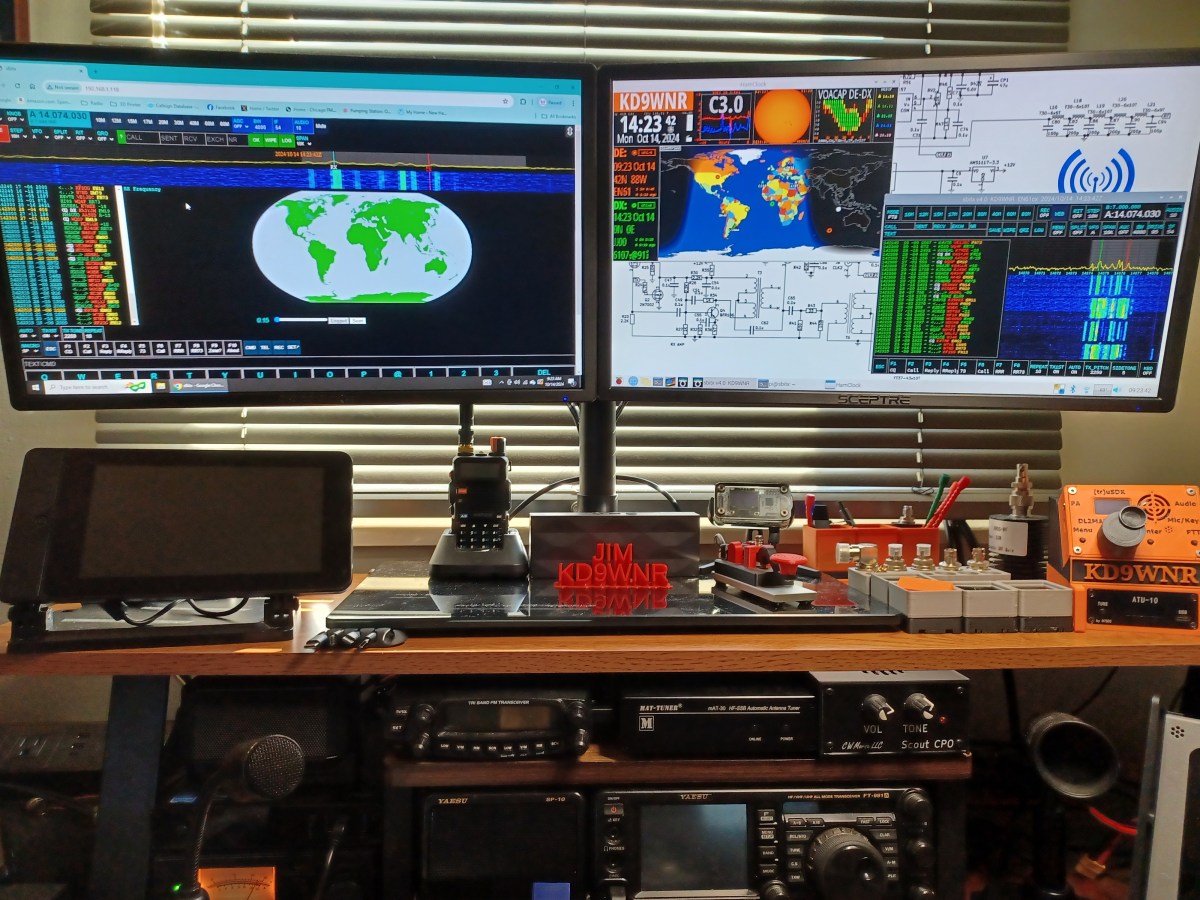
https://www.qrz.com/db/KD9WNR

I was scanning the Club 440 Repeater on the way home from work, and I heard a new callsign, talking with a member. The new Ham was asking some really basic stuff about how to call “CQ” 😀 and station-to-station; How do I sign-off, and do I need to give my callsign after every transmission (which he was)? He was getting some good and proper advice from this Elmer on operating procedures and such and then Elmer brought up the topic of QRZ.com…

QRZ.com is a major platform in the the amateur (ham) radio community. It primarily functions as a callsign (call-sign) database, logbook service, and community hub for radio amateurs.

The name “QRZ” comes from the Q-code “QRZ?” which in radio parlance means “Who is calling me?” — fitting for a site whose core function is to look up who’s behind a given callsign.
Wikipedia

Originally, QRZ began by incorporating FCC call sign data (for U.S. amateurs) and later expanded to incorporate international amateur license records.

Global Reach and Demographics

QRZ.com serves a worldwide audience, drawing amateur radio operators from nearly every country. While the site does not publish detailed demographic statistics, usage trends reflect the broader amateur radio community:

  • Global participation: Licensed operators from North America, Europe, Asia, and beyond actively use QRZ for logging contacts and verifying callsigns (QRZ.com).
  • Core user base: Primarily licensed amateur radio operators, though shortwave listeners and radio hobbyists also participate.
  • Age range: Amateur radio traditionally skews toward older demographics, but QRZ has attracted younger operators through its online tools, forums, and integration with modern logging software (ARRL demographic studies).
  • Technical interests: Users tend to be technically literate, often involved in electronics, computing, and RF communications.

Key Features of QRZ.com

QRZ.com offers a rich set of tools and services tailored to the needs of radio amateurs:

  1. Callsign Lookup / Online Callbook
    The core feature allows users to look up callsigns to identify licensed operators, view station details, and read operator-provided biographies (QRZ.com).
  2. User Profiles
    Each registered operator can customize their profile with photos, station equipment lists, biographies, and QSL information (Wikipedia).
  3. Logbook of the World (LoTW) Integration
    Operators can log their QSOs (radio contacts) online. QRZ’s logbook system supports double-blind confirmations when both parties log matching details (QRZ Logbook Docs).
  4. Awards and Certificates
    Users can track their confirmed contacts and apply for awards such as Worked All States (WAS) and DXCC equivalents through QRZ’s award program (QRZ Awards).
  5. XML Data Service / API Access
    Paid subscribers can access advanced XML data services, allowing seamless integration with third-party logging programs and contest software (QRZ XML Service).
  6. Community Forums
    QRZ hosts active forums covering technical discussions, equipment reviews, antennas, licensing questions, DXing, and general ham radio conversation (QRZ Forums).
  7. Swapmeet / Marketplace
    A popular section where operators buy, sell, or trade radio equipment, often including transceivers, antennas, and accessories (QRZ Swapmeet).
  8. News and Articles
    The platform publishes regular news updates, opinion columns, and technical articles relevant to the amateur radio community (QRZ News).
  9. QSL Tools
    QRZ helps manage QSL confirmations, including a QSL ListMaker feature and support for bureau or direct card exchanges (QRZ.com).
  10. Statistics and Reports
    Daily updates provide information on new callsigns, popular lookups, expired licenses, and other activity metrics (QRZ Statistics).

Why QRZ.com Matters

For many operators, QRZ.com is the first stop when making or confirming a contact. Its extensive callsign database, integrated logging system, and community features make it a central resource in the amateur radio hobby. Whether you are a newly licensed ham or a seasoned DXer, QRZ.com offers the tools to connect, record, and participate more fully in the global amateur radio community.


In summary: QRZ.com has grown from a callsign directory into a full-featured platform that blends logging, social networking, technical resources, and community engagement—all in one place.
How Much Electronics is on the Test?

I was an Electronics Technician for many years. But, when I took a peek at the Extra Class Exam, I quickly realized I had a lot more studying to do. I’ll be happy with my General Class privileges for awhile 🙂

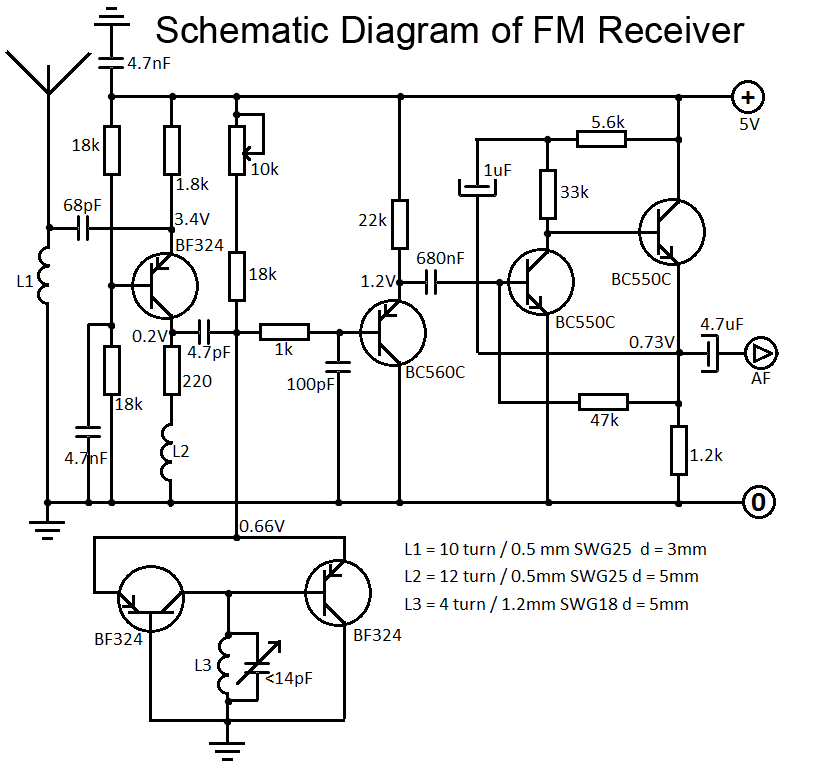
Now that basic proficiency in Morse Code is no longer required to be a licensed Ham, the most daunting aspect of the exam for me was/is the Electronics Theory. The three classes: Technician, General, and Extra, each builds upon the previous one, increasing in complexity and depth. Here’s how the electronics theory body of knowledge differs across the three levels:

Technician Class (Entry-Level)

  • The Technician license focuses on fundamental electronics concepts and basic radio theory. The exam covers:
    • Ohm’s Law (Voltage, Current, Resistance, Power)
    • Basic circuit components (resistors, capacitors, inductors, diodes, transistors)
    • Simple circuit analysis (series and parallel circuits)
    • Basic AC/DC theory and power calculations
    • Intro to radio waves and modulation (AM, FM, SSB, digital)
    • Antenna basics (dipoles, verticals, feedlines)
  • This level assumes little to no prior knowledge of electronics.

General Class (Intermediate-Level)

  • The General license builds on the Technician-level knowledge with a deeper dive into electronics theory and radio operation. The exam includes:
    • More advanced circuit theory (impedance, reactance, resonance)
    • Semiconductors and amplifiers (diodes, transistors, vacuum tubes)
    • Power supplies and rectifiers (AC/DC conversion, voltage regulation)
    • Intermediate radio wave behavior (propagation, ionospheric layers)
    • More complex modulation and signal processing (SSB, CW, digital modes)
    • Intermediate antenna theory (gain, directivity, SWR, matching networks)
    • RF filters and transmission lines (coaxial loss, standing waves)
    • Increased emphasis on safety (RF exposure calculations, grounding)
  • This level assumes a working understanding of basic electronics.

Extra Class (Advanced-Level)

  • The Extra license demands a deep technical understanding of electronics and radio engineering. The exam covers:
    • Advanced circuit design and analysis (complex impedance, Smith charts)
    • Advanced modulation techniques (digital signal processing, phase-locked loops)
    • Advanced RF and microwave principles (waveguides, UHF/VHF/microwave)
    • Antenna design and theory (Yagis, phased arrays, near-field/far-field)
    • High-level propagation analysis (ducting, gray-line, auroral effects)
    • Advanced digital electronics (logic gates, microcontrollers, software-defined radio)
    • RF interference and mitigation (filters, shielding, noise suppression)
    • Advanced safety and station setup (lightning protection, RF safety limits)
  • This level assumes a strong foundation in electronics and radio science.

Each level progressively increases in technical complexity, allowing amateur radio operators to understand and operate more sophisticated equipment while gaining access to expanded frequency privileges.

I was an Electronics Technician for many years. But, when I took a peek at the Extra Class Exam, I quickly realized I had a lot more studying to do. I’ll be happy with my General Class privileges for awhile 🙂

Join a Ham Radio Club

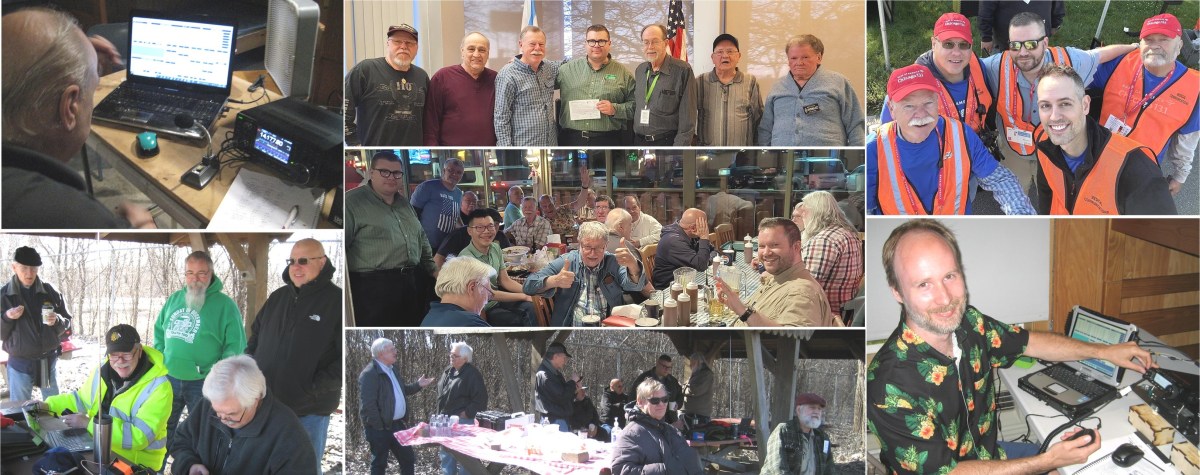
The biggest difference among the Clubs I have participated with is the culture; The way the members communicate, carry themselves, and interact. Just like with any other groups of folks that come together, there is some undefinable comfortability factor that makes folks choose to stay in that group.

Being a member of a local Amatuer Radio Club can offer many benefits to enhance your experiences and enjoyment of the Ham radio hobby. Many Clubs have classes and/or offer testing sessions to help you achieve or upgrade your license. Most Ham Radio Clubs welcome members of all levels of experience.

Most Clubs identify with their geographic area, city/town, or county, but may have members outside the immediate area as well. Annual Membership Dues are generally modest, in the $20 – $40 dollar range in my area. And, most Clubs nowadays have a Website and a Newsletter. Other similarities I’ve found in my local Clubs are that they are non-profit organizations, with a Constitution, Bylaws, elected officers, board of directors, and Committees to deal with various Club business. Most Clubs maintain at least one, if not several Repeaters; A minority of Clubs do not. Most Clubs have some level of social gathering which may include Monthly meetings, regular breakfast or lunch meet-ups and maybe a sprinkling of Special Events like Field Day or POTA outings. And like any Club, all the work done is voluntarily and by a small portion of the overall membership. That’s where the similarities end… I’ve found that the Clubs in my area are all a “bit different” in some dimensions.

Some Clubs fall into a category called “Repeater Clubs”. These clubs expend a lot of their resources in money and time to maintain their Repeaters and keeping them in operation.

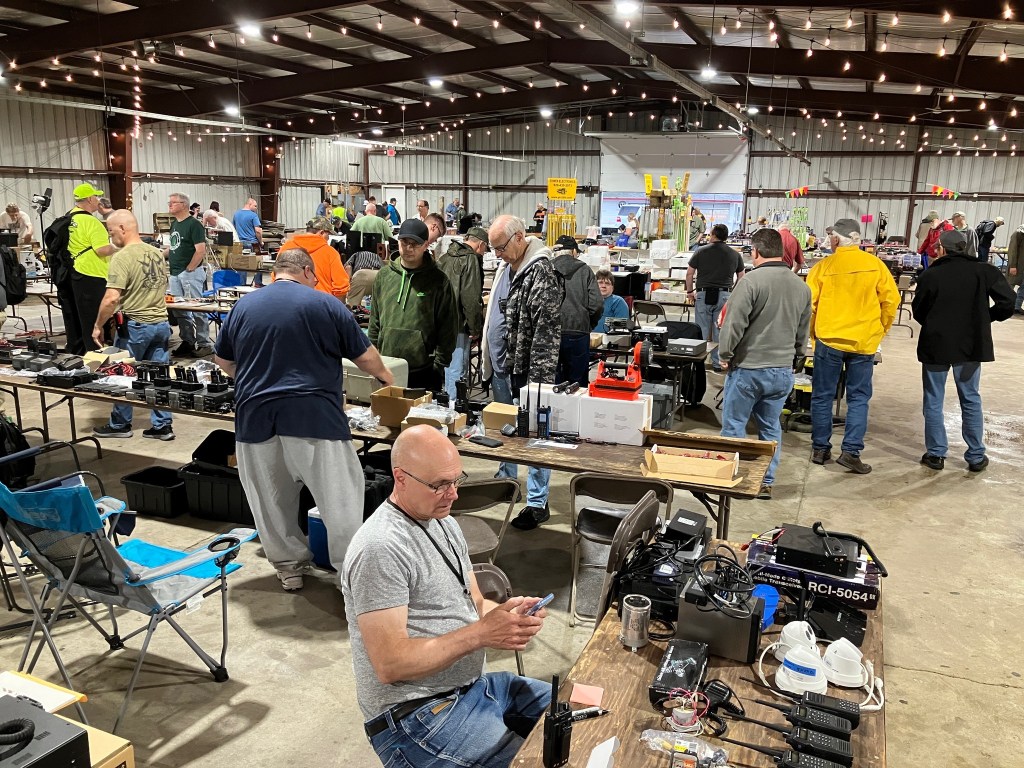
Some Clubs operate an annual Ham Fest, most do not. Putting on a large Ham Fest is a big undertaking from arranging the venue, food trucks, insurance, publicity, ticket sales, soliciting vendors and sponsors, etc., etc…

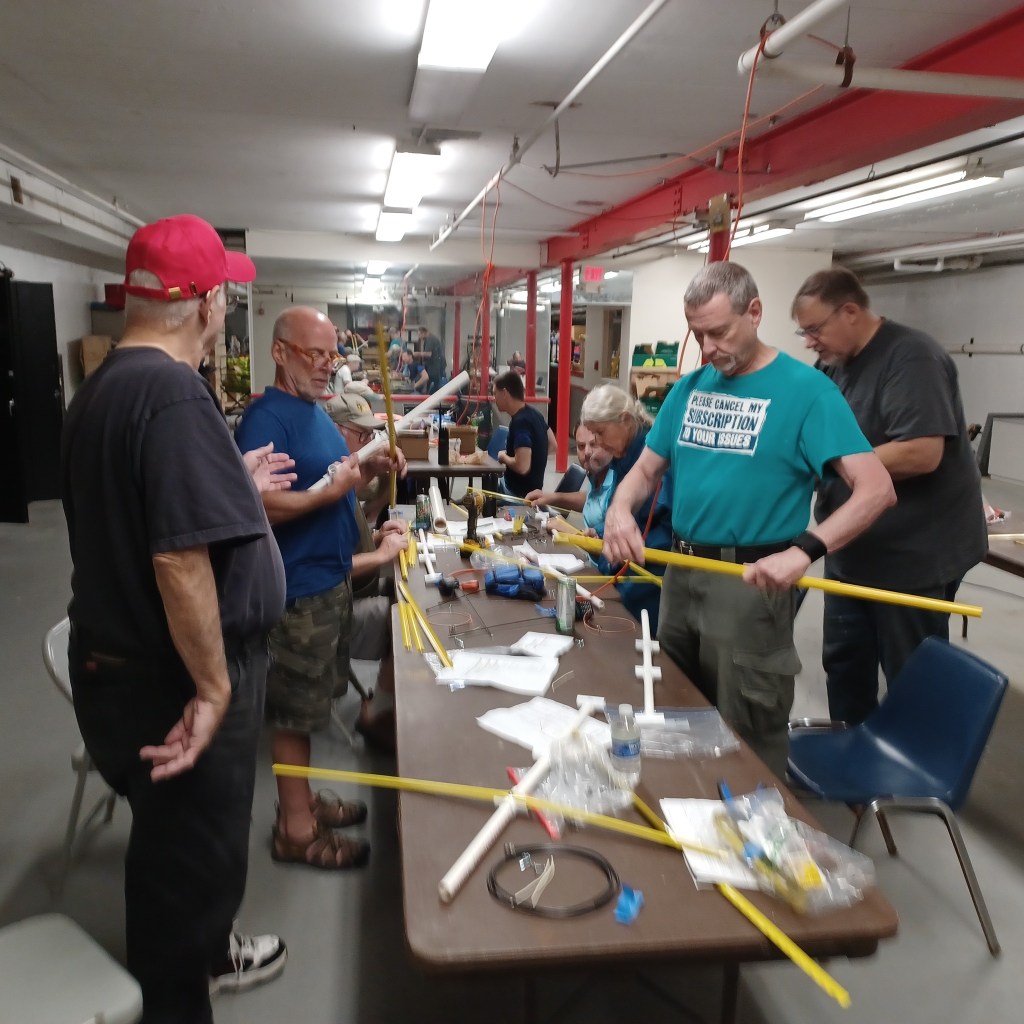
Some Clubs are more focused than others on the practice of the hobby itself and have activities for building/fixing Ham equipment or operating on-the-air. And, some may take a more serious approach to activities like Field Day than other Clubs.

The biggest difference among the Clubs I have participated with is the culture; The way the members communicate, carry themselves, and interact. Just like with any other groups of folks that come together, there is some undefinable comfortability factor that makes folks choose to stay in that group. Also note that a lot of Hams I know are in more than one or two Clubs; I’m in two myself. You may find different things you’re looking for in each.

The best way to get involved with a Club is listen to the repeater traffic or regular nets on VHF or UHF in your area, listen in and participate. Ask them what clubs are in the area and which they belong to. You can get to know the members before showing up at a meeting or event; You will be recognized and welcomed!

I’m fortunate that I live in a large metro area, and there are many clubs to choose from. If you’re in a rural area, your options may be limited. Many Clubs are “ARRL Affilliated”. You can search for one near you at: https://www.arrl.org/find-a-club

Not all Clubs are ARRL affiliates; It doesn’t mean they’re any better or worse. The Club membership just didn’t see the value in registering. To find these Clubs you’ll have to Goggle and see what’s out there.

I wish you the best of luck in finding a Ham Radio Club that you can engage with. It’s the greatest way to build friendships with like minded folks with a shared interest and the opportunity to socialize IRL (in-real-life), not just on-the-air.

Get Your Amateur Radio Operators License

In the United States, the FCC (Federal Communications Commission) issues amateur radio licenses. There are three main classes of licenses, each granting different levels of privileges:

1️⃣ Technician Class (Entry-Level)

Privileges: Access to VHF/UHF bands (2m, 70cm, etc.) and limited HF privileges (CW on 80m, 40m, 15m & SSB on 10m).
Requirements: A 35-question multiple-choice exam covering basic electronics, regulations, and operating procedures.
Best For: Local communication, emergency response, and digital modes like APRS and FT8 on VHF/UHF.

2️⃣ General Class (Intermediate)

Privileges: Expands HF privileges, allowing worldwide communication on most bands.
Requirements: Pass the Technician exam + an additional 35-question test with more technical and regulatory content.
Best For: DXing, HF digital modes, and participating in global ham radio networks.

3️⃣ Amateur Extra Class (Advanced)

Privileges: Full access to all amateur bands and frequencies.
Requirements: Pass Technician + General + a 50-question exam covering advanced electronics, antenna theory, and FCC regulations.
Best For: Dedicated hams wanting full frequency access and experimentation opportunities.


How to Get Licensed:

1️⃣ Study – Use books like the ARRL License Manual, online courses (HamStudy, QRZ.com), or apps like Ham Test Prep.
2️⃣ Practice Exams – Take free practice tests online to prepare.
3️⃣ Find a Test Session – Exams are administered by Volunteer Examiners (VEs) through ARRL, W5YI, or other groups.
4️⃣ Pass the Exam – Exams are usually in-person but some groups offer remote testing.
5️⃣ Get Your Callsign – The FCC issues your license and callsign within days via their website.

To assist you in obtaining your U.S. amateur radio license, here are some recommended study materials and information on finding local exam sessions.

Recommended Study Materials:

  1. ARRL Ham Radio License Manual (5th Edition):
    • This manual provides easy-to-understand sections and includes the latest question pool with an answer key, effective through June 30, 2026. It’s designed for self-study and classroom use. arrl.org
  2. HamStudy.org:
    • A free online platform offering flashcards, practice tests, and question pools to help you prepare for the exam. hamstudy.org
  3. ARRL Exam Review for Ham Radio:
    • An online tool that allows you to review chapters from the ARRL study manual and take randomly generated practice exams using questions from the actual examination question pool. arrl.org

Finding Local Exam Sessions:

To locate an amateur radio license exam session near you, can use the ARRL’s exam session search tool.

arrl.org

By entering your ZIP code, you can find upcoming exam sessions in your area. Please note that some sessions may require pre-registration, while others might accept walk-ins. It’s advisable to contact the session organizers ahead of time to confirm details.

Additionally, platforms like HamStudy.org provide listings of both in-person and online exam sessions.

ham.study

Remember to bring a valid photo ID, any existing FCC licenses (if applicable), a calculator without memory functions, and the necessary exam fee (usually around $15) to your exam session.

Good luck with your studies and exam! If you have any more questions or need further assistance, feel free to ask.

Baofeng UV-5R FAQs

The strongest argument for the Baofeng haters is that these radios are noisy when transmitting… However, it appears that Baofeng has improved spectral purity on their more recently produced radios.

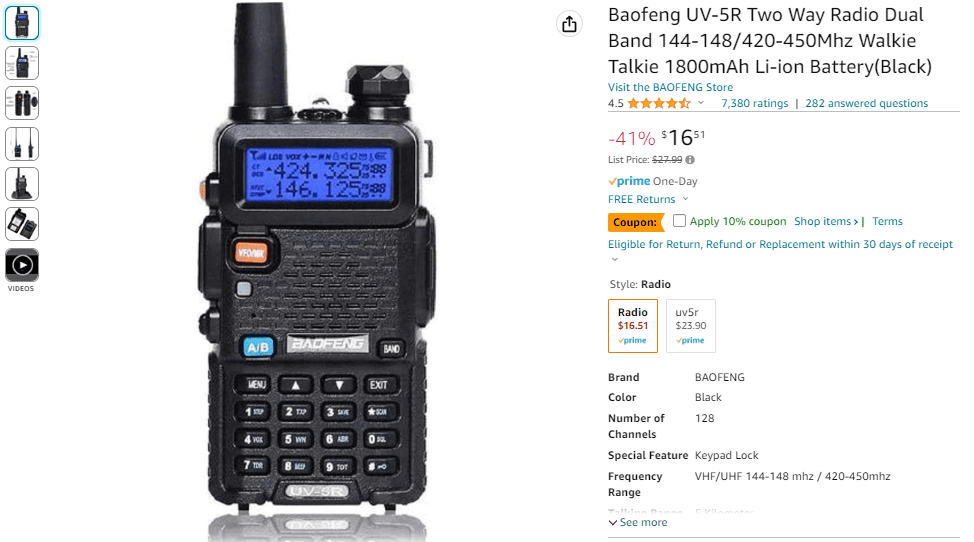
Like many, my first “Ham radio” was a Baofeng UV-5R. This radio has been around since 2012; The base model is still available and is essentially the same as it was over 10 years ago. I’d be willing to wager that there are more UV-5R based radios in the hands of consumers than any other HT made. I say consumers, not Hams, because there are a lot of these sold to people that do not have a license to transmit with it. The UV-5R can be found online everywhere… Amazon, Ebay, and Chinese market sites like Aliexpress and Temu. These radios are cheap… The basic 5W dual-band version can be had for less than $20.

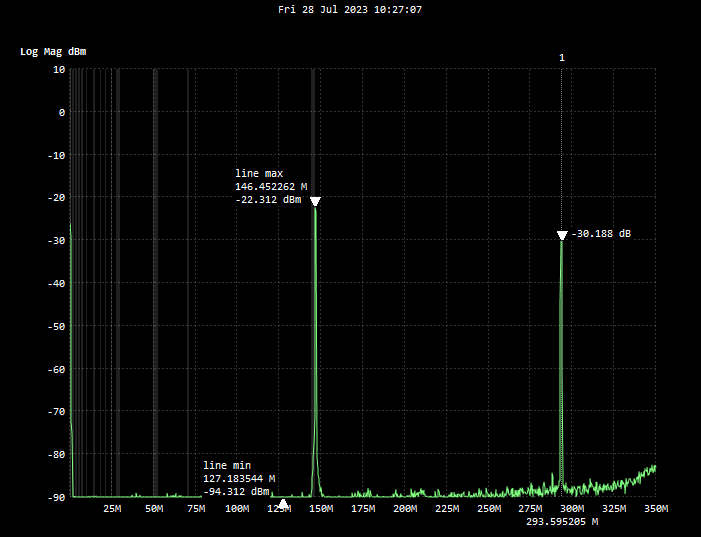
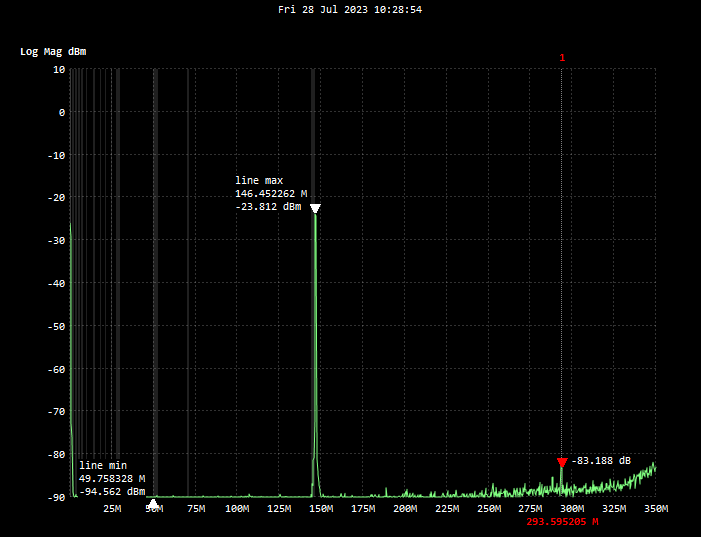
Be advised… There are some Baofeng haters out there in the Ham radio community. Their strongest argument is that these radios are noisy when transmitting. Meaning, it transmits harmonics at a level that is so high it can potentially interfere with other signals outside of the Amateur Bands. FCC requires that the second harmonic be greater than -40db from the selected transmit frequency… Consistency in Quality on these radios is very poor; Some Baofengs are lucky to get the harmonics down to -20db. There’s no disputing that, and all agree that it is not a “good thing”. However, it appears that Baofeng has improved spectral purity on their more recently produced radios. To prove this, I compared my first Baofeng UV-5RIII with a recently purchased UV-5R; This one is limited to Ham bands. As you can see from the test… Not all Baofengs are noisy.

The second harmonic on the new Baofeng is -57db from the fundamental… A winner!

The Baofeng haters also point out that the Receiver on the Baofeng has very poor filtering; Unwanted signals saturate the receiver and can make the radio go “deaf”. I don’t doubt it; But, I have not personally experienced it. Either way, I’m not interfering with anyone so what’s the beef? And third, there is a perception that UV-5R users operate these radios illegally and transmit on frequencies not authorized by the FCC. This perception is supported by the many who do exactly that. But it’s not the Radio’s fault. The best thing we can do as Hams is try to keep educating the public on what these radios are, and what their legal use is.

It’s been said; “You’ll always Love your first girl.” Well, I still love my Baofengs. I learned a lot about two-way radio from my UV-5R. And, I’m still amazed at the features that are packed into this tiny $20 radio. I continue to monitor social media groups and websites that focus on Baofeng Radios, and it seems the same questions come up over and over again. Some of these FAQs I’ve added here:

What frequencies do I enter in the UV-5R to receive Police and Fire communications? You can’t… Most Public Service organizations have moved to digital transmissions. The UV-5R is an Analog FM Radio. It can not receive digital transmissions of any kind. Some rural areas may have agencies that are still using analog for Public Service activity… You’ll have to check locally.

Can I receive Air Band communications used at my local airport on the UV-5R? No… The Air Band Frequencies (108-137 MHz) are out of the range of frequencies the UV-5R works on (136-174 MHz). Additionally, the Air Band uses AM modulation; The UV-5R is FM only.

Can I receive FRS and GMRS communications on the UV-5R? Yes… The UV-5R can be programmed to receive the FM Frequencies in the 462MHZ and 467Mhz ranges used by the Family Radio Service (FRS) and General Mobile Radio Service (GMRS).

Can the UV-5R be programmed to transmit on FRS and GMRS frequencies? Maybe… Most UV-5R radios have the UHF RX/TX frequency range of the original, from 400 Mhz to 520 MHz. FRS and GMRS are within this range (462 and 467 Mhz). However, some of the newer UV-5R being sold on Amazon and other US outlets have a UHF frequency range of 420 Mhz to 450 Mhz; This limits use to the US 70cm amateur band and prevents transmitting on the FRS and GMRS frequencies. Which brings us to the next, and most controversial question…

Can the UV-5R be used to talk on FRS and GMRS bands? Yes and No… While most UV-5Rs, as mentioned above, can be programmed to do so; It is illegal to use a UV-5R to communicate with others on FRS or GMRS. Note: There are GMRS variants being sold by some US distributors called the UV-5G or UV-5X; These have firmware limiting use to the GMRS Band.

It is illegal to transmit on FRS or GMRS frequencies using any radio intended for use on the Amateur Bands. Radios for FRS/GMRS must meet certain FCC requirements like maximum power, locked channels/modes, non-detachable antennas, etc, etc… It’s OK to listen, but don’t hit the PTT button, unless it’s an “emergency”.

So, on what frequencies or bands is my UV-5R legal to use? The UV-5R is legal for use by licensed Ham Radio Operators on the 2 meter (VHF) and 70 cm (UHF) Amateur Radio Service bands; These are the frequencies between 144-148 Mhz, and 420-450 Mhz respectively.

Bottom line is… The Baofeng UV-5R is a Ham radio. It should be used by licensed Ham’s who know what frequencies to receive and transmit on. It is not the best choice for stuff like: talking to your buddies while out 4-wheeling or hunting, nor giving them to family members for emergencies in case the phones go down. Unless of course, all operators are licensed Hams. If not, you’re probably better off with an FRS or GMRS radio. These radios are pre-programmed with “channels” and are ready for use out of the box. FRS is low power, so it’s only good for short distances; Use of FRS radios does not require a license. GMRS allows higher transmit power and repeater use. But to be legal, at least one family member needs a GMRS license. There is no test, but there is a $35 fee; The license is good for 10 years!

If you just got, or are working toward getting, your Ham license and want an inexpensive “learning tool” or first radio, I personally think the basic UV-5R is not a bad choice:

  • There’s a ton of articles and YouTube tutorials on the UV-5R
  • Accessories and extra batteries are inexpensive and easy to find online
  • It’s cheap! No big financial commitment until you have more knowledge to make a better choice on equipment needs
  • The UV-5R (and most variants) is fully supported by CHIRP

The majority of traffic on the 2m and 70cm Ham bands is FM analog “Phone” (voice). Hams talk to each other on these bands using Repeaters; A repeater uses two different frequencies to RX and TX. The number of available repeaters and the frequencies they operate on will vary depending upon the area of the country you are in. If close enough, Hams can communicate directly from one radio to another using Simplex., where both radios are set to the same frequency for RX and TX. In the US, these frequencies are defined in the Band Plan. You’ll want to follow the Band Plan.

The easiest way to get all the Repeater and Simplex frequencies in your radio is to use Computer Programming Software (CPS). Most radios will have a CPS available from the manufacturer of the radio… Some of these are bare-minimum and are “clunky” to use. Instead of the OEM CPS, many, many Hams use CHIRP to program their radios. CHIRP is the most popular open source (free) CPS, and it is compatible with not only the UV-5R and all the variants, it works with most popular HT’s from major manufacturers. With CHIRP, you can search for local repeaters by your location via query. The frequency settings returned by the query are easily cut-and-pasted into your Memory/Channel list. There are also utilities to add frequencies to your radio for FRS, GMRS, NOAA Weather, etc.. Assuming your radio works or allows programming at those frequencies. You’ll need:

  • A CHIRP compatible radio
  • A USB Programming Cable for your radio
  • A PC running Windows
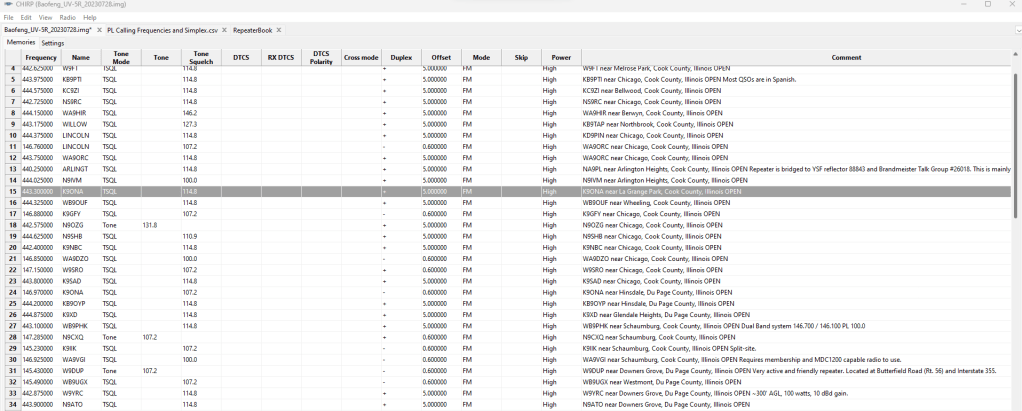
Screenshot of CHIRP with my Local Repeaters, ready to Upload to Radio

There’s plenty of videos and tutorials on how to use CHIRP. Since I can’t improve on what’s already out there… I’ll just say that learning to use CHIRP is almost a “rite of passage” for a new Ham. Mastering CHIRP is a good way to learn how to setup a Ham radio using CPS. This is an essential skill you need to get started.

Get a CCR

For $30-$40 you get an inexpensive Radio that will be a good learning tool as you figure out how to use it, connect it to a PC and program it. These are skills you need that are not covered in the Manual or Exam.

Way before I got my license, I got a CCR (Cheap Chinese Radio)… When I was looking up information for new Hams, over and over folks would say the best way to learn about Ham Radio is to Listen In. Learn how to connect it to the 2m (VHF) and 70cm (UHF) repeaters you may have in the area. You’ll learn about offsets and PL Tones, stuff you need for the test! You’ll find out where the action is, when and on what repeaters the “nets” are on, and what folks are rag chewing about. I listened to local repeater traffic for many months before I took the test; I’m glad I did, even though I couldn’t join in the conversation; I had more confidence on-air when I did get my ticket, and I was on the air as soon as it posted.

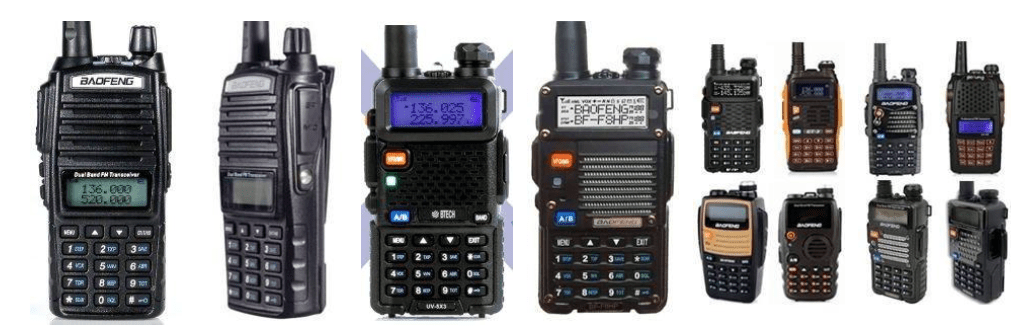
You don’t need a License to posses or purchase a Radio and listen in, you just can not transmit. Like many, my first CCR was the infamous Baofeng UV-5R (pictured below). There’s plenty of controversy on the UV-5R, and all the CCR’s, especially the Baofengs. I won’t go into it here; I’ll just say, I have two of them. For $30-$40 you get an inexpensive Radio that will be a good learning tool as you figure out how to use it, connect it to a PC and program it. These are skills you need that are not covered in the Manual or Exam.

Your first Radio should be a dual-band hand held or “HT” (Ham for walkie-talkie). The bands covered should be VHF/UHF on 2 Meters and 70 Centimeters. These are the frequencies between 144-148 Mhz and 420 – 450 Mhz (respectively). At least in my area, 2m is the most active. There are tons of radios with these bands, from the Baofengs I mentioned, up to the ICOM/Yaesu/Kenwood brand transceivers for hundreds of dollars more. Most put out 5 Watts of Tx power, some do 7 or 8 Watts. IHMO: A couple of watts is not a determining factor. I wouldn’t buy anything too fancy or expensive until I knew where I was going in the hobby, and where most of my activity occurred. I’m already looking to sell off my GMRS mobile unit and quad-band mobile bought so I can upgrade to something that better suits needs.

It was much fun when my first radio arrived from Amazon… I spent the rest of the evening (and most of the next morning) learning how to

  • Connect my radio to a PC with the Programming Cable (you’ll need one of those) and getting through the challenges of installing the correct drivers.
  • Download and installing CHIRP, the universal freeware radio programming software on to my PC
  • Learning how to use Chirp
    • Download settings automatically for all the repeaters in the local area
    • Download NOAA weather channels (TX = OFF)
    • Download FRS and GMRS channels

Chirp connects to the Repeaterbook.com database thru the software, you can query for repeaters in your geographic area and Chirp sets them up in your radio automatically! The NOAA and FRS/GMRS is also downloaded in the same way.

It is illegal to transmit on FRS or GMRS frequencies using any radio intended for use on the Amateur Bands. Radios for FRS/GMRS must meet certain FCC requirements like maximum power, locked channels/modes, non-detachable antennas, etc, etc… It’s OK to listen, but don’t hit the PTT button, unless it’s an “emergency”.

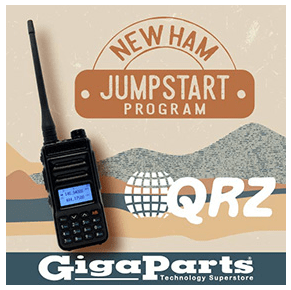
At the time of this writing, there’s a deal for newly licensed Hams on Gigaparts.com. In collaboration with QRZ.com, they made available a free Radio and accessories for anyone Licensed in the last 30 days. The free Radio promotion ended October 2021. But there are still packages left and they are offering these at a huge discount. Until March 31, 2023, anyone Licensed in the last 6 months can get the same package discounted big-time. Maybe they’ll extend the date if they have a bunch leftover. I got one just to have as a knock-around HT. Details on the New Ham Jumpstart Program are here: https://www.qrz.com/jumpstart.