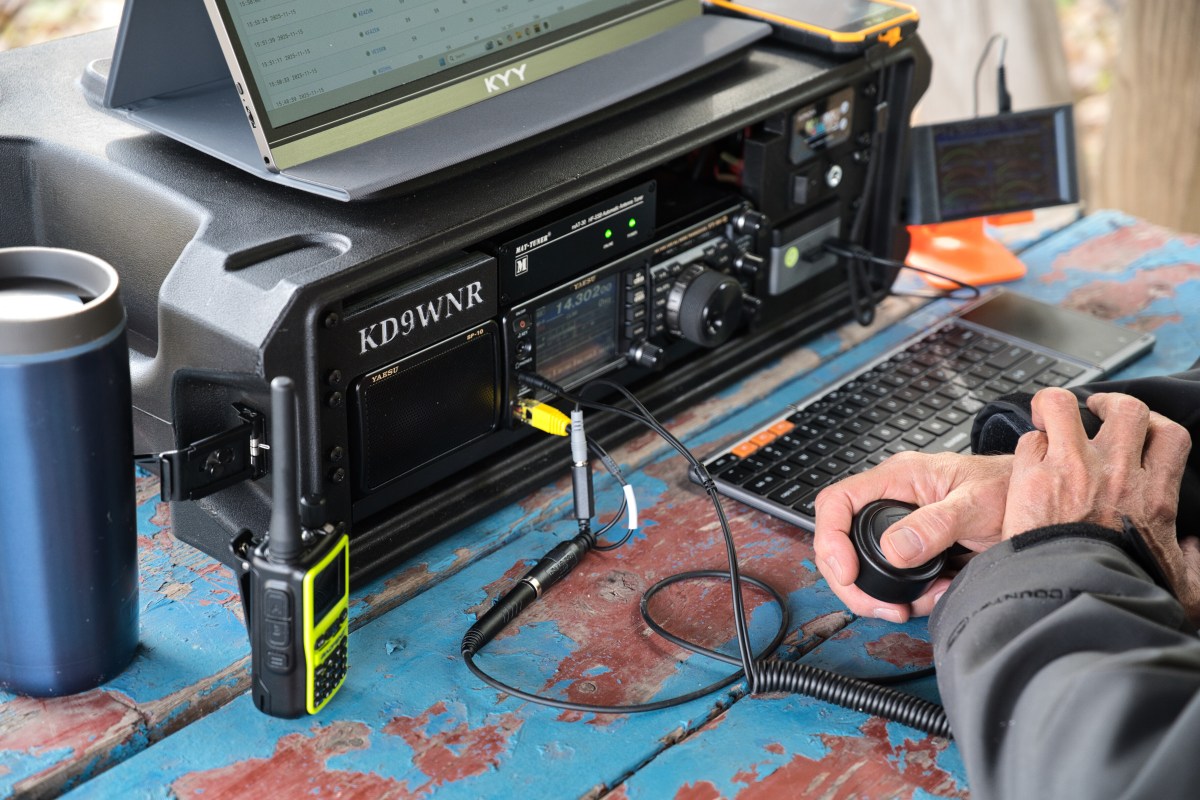
Go-Boxes have a wide appeal in the Amatuer Radio hobby among Hams that like portable operations. Hams that do POTA Activations, participate in Field Days, and even “preppers” all have an interest in a grab-and-go kit to get a station on-the-air quickly almost anywhere.
First step is to determine where and what your Go-Box will be used for primarily. A POTA station may need totally different transceiver capabilities from an Emergency Communication (EmComm) station. The choices are many…
- Emergency Communications (EmComm): Supports RACES, ARES, CERT, and Skywarn operations.
- Recreational Field Ops: Perfect for POTA (Parks on the Air), SOTA (Summits on the Air), and Field Day.
- Training & Outreach: Great for demos, scout events, and community preparedness.
Maybe you have an “extra” transceiver you’ve decided to put into a Go-Box, or designing one from scratch… Either way, you’ll need to decide on a Radio first, and then decide on what you want connected to it…
- What kind of Battery? How Big?
- Do I need a Power Supply (if 115v is available)
- Do I need a Computer port or should I have a PC Built-In?
- Do I need an Antenna Tuner?
Once you’ve decided all the stuff you want or need to get “in the box”… It’s time to pick a Box. Ham radio go-boxes are commonly built using rugged, customizable cases like Pelican, Nanuk, and Gator rackmount cases. These offer durability, modularity, and protection for sensitive radio gear in field conditions. But a lot of creative folks make go-boxes out of Ammo Cans and Picnic Coolers.
My first Transceiver was a Yaesu FT-991A; I later picked up a classic Kenwood TS-2000 that replaced the Yaesu as my primary Shack Radio, so I decided to re-task it for portable use.
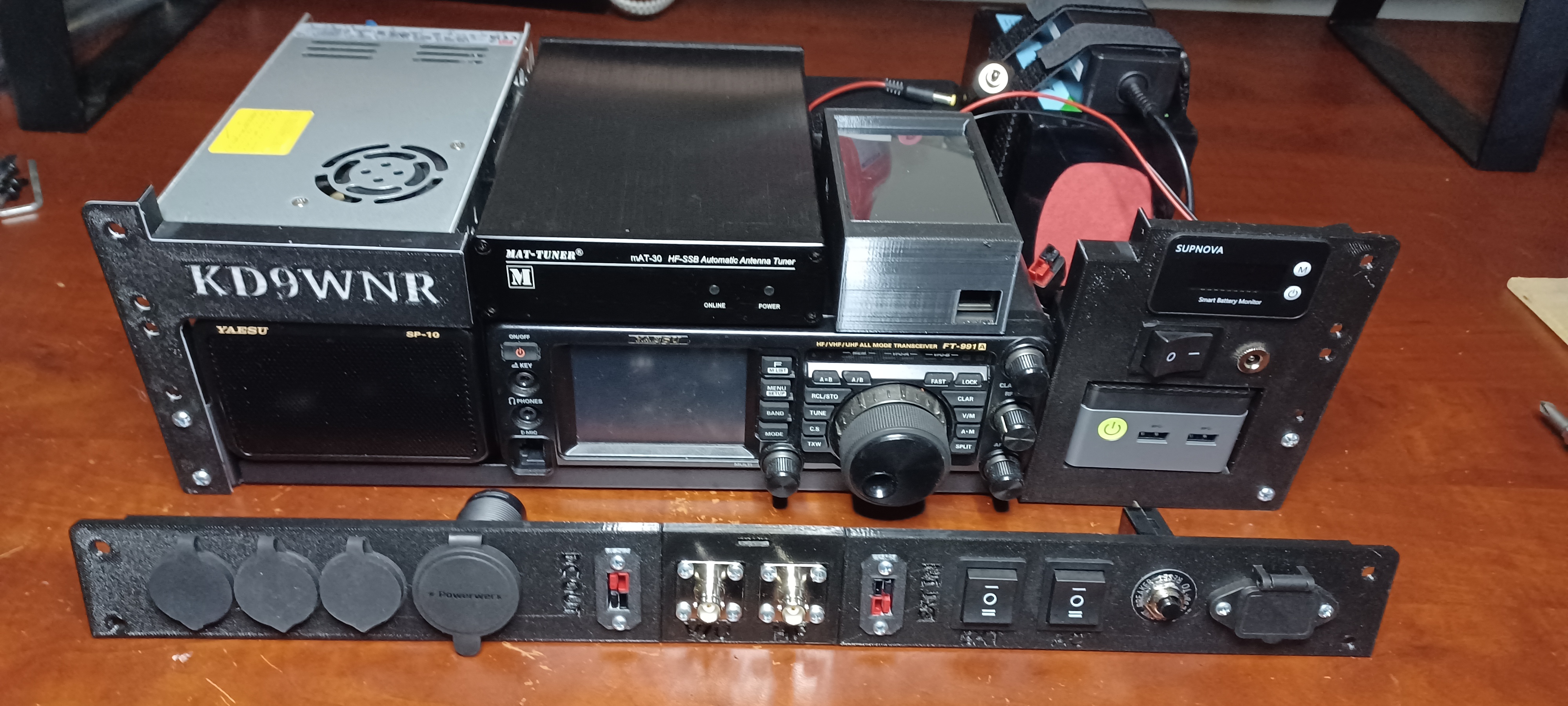
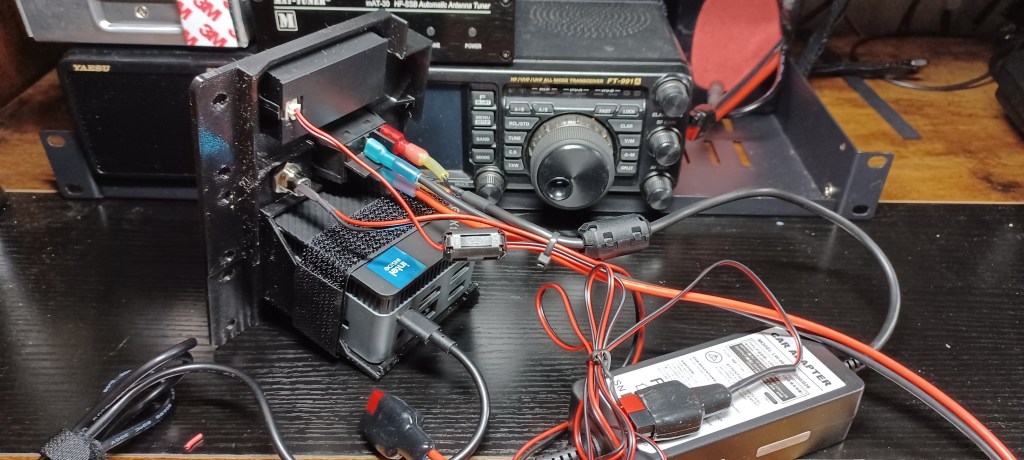
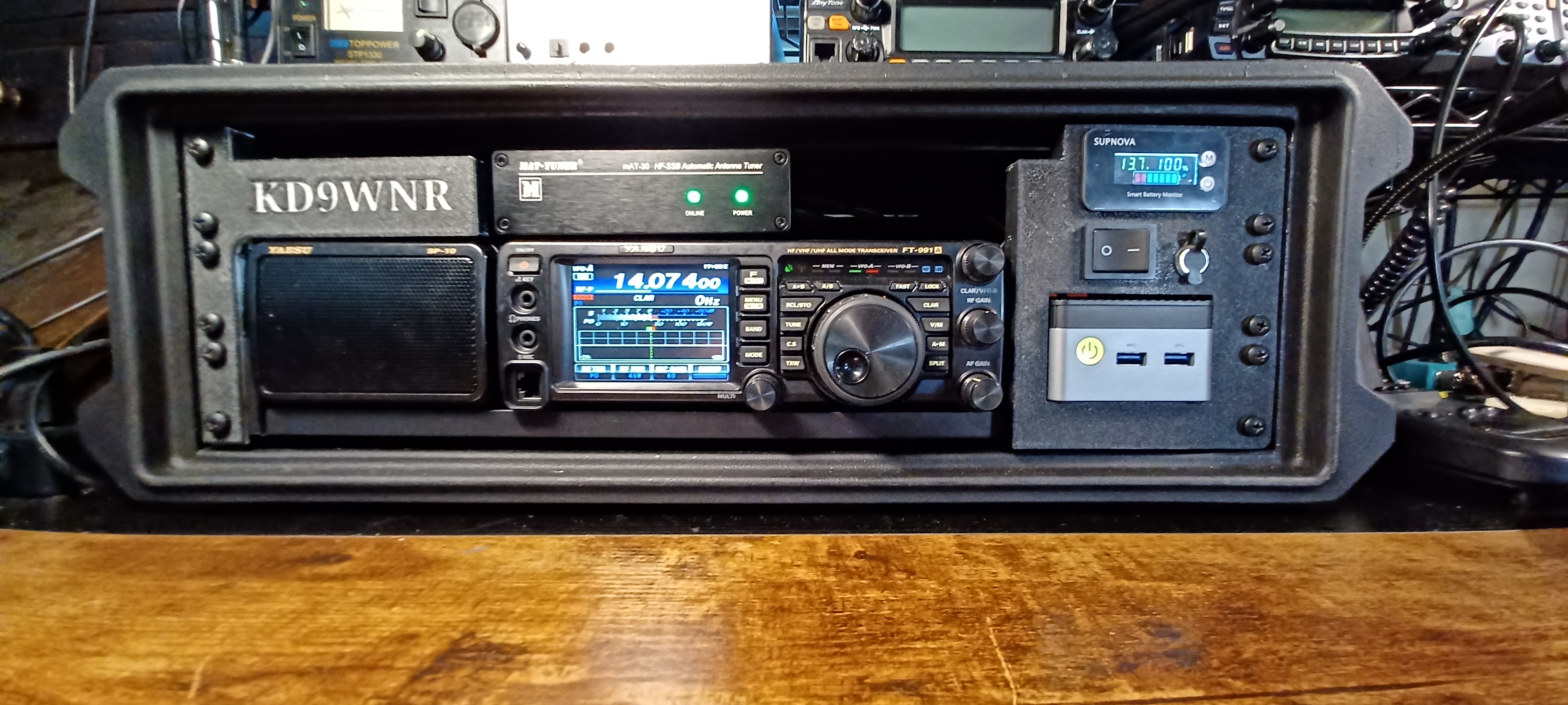
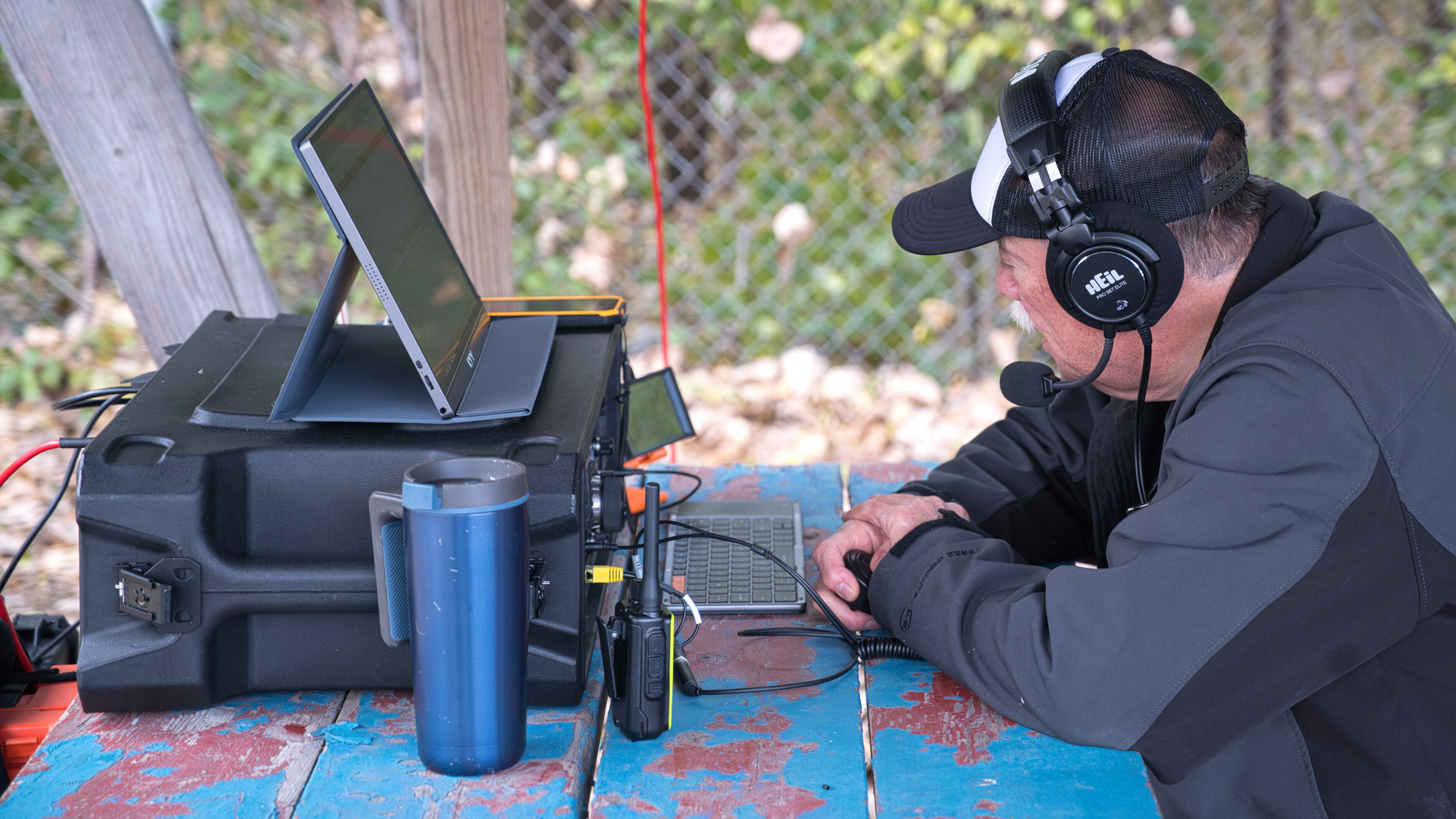
Here’s a peek at what’s inside my Go-Box… It all fits inside a Gator G-Pro 3U Shallow (13″) Rack Case:
- Yaesu FT-991A and SP-10 Speaker
- Meanwell LRS-350-12 30A Power Supply
- Power Pole Distribution Block (Fused)
- Pocket Mini PC Nucbox G5 (and 12vdc power supply)
- Bi-Directional 2-to-1 USB Switch
- Bioenno 20Ah LiPo Battery
- Supnova Battery Monitor
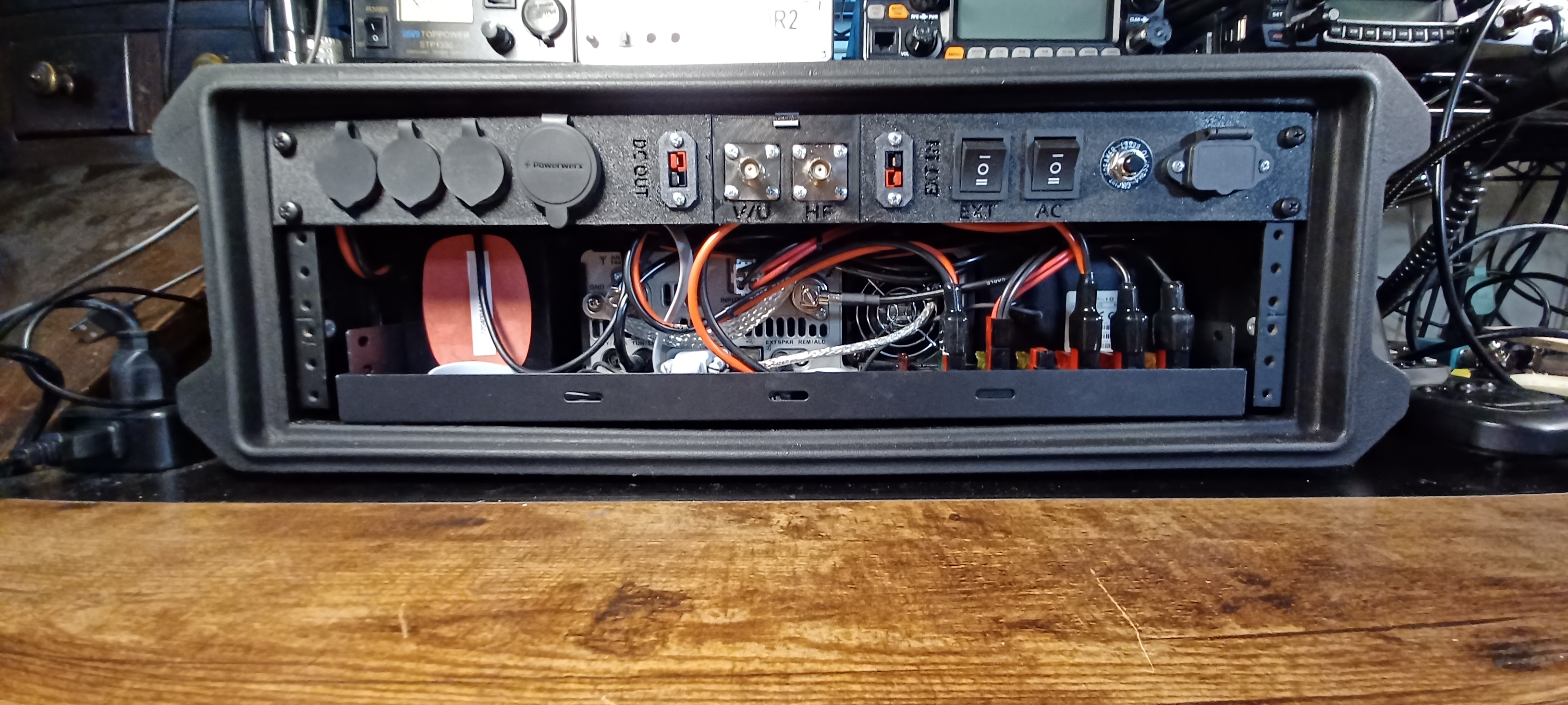
The 1U Rear Panel is 3D Printed. The STL files and details on the components used are here: https://www.printables.com/model/1485996-1u-go-box-rack-panel

Looking from the rear… There’s a USB Port connected to a Bi-Directional USB Switch. The Switch is also connected to the Mini PC and the USB Data Port on the FT-991a; This allows easy switching of the transceiver from the internal PC to an external Laptop or other device. Next to that is an HDMI Port extended from the Mini PC, and an RJ-45 Jack that connects to the transceiver CAT Port. The larger port is a Powerwerx 65W USB A/C Charger.
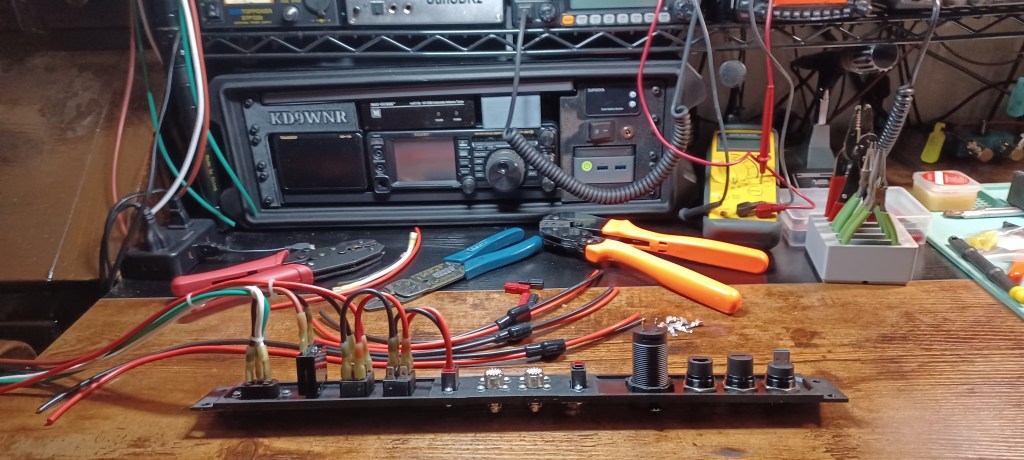
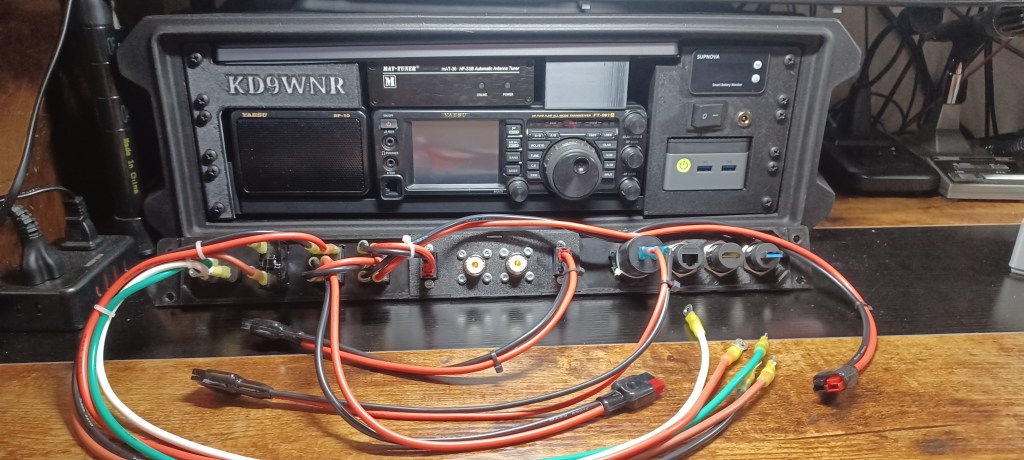
In the center are the Antenna Connectors, and Power Pole connections for an external DC source (IN), and Power Poles to power other devices (OUT) from the source selected on the Go-Box.
Starting on the right side, there’s an IEC 320 C14 Socket for a standard AC Power Cord. The Circuit Breaker is in-line to the Power Supply. The two Rocker Switches are used to switch Primary Power Source between AC or Battery, and Internal or External Battery.
A list with hyperlinks to all the components described above can be found, with the 3D Print files here: https://www.printables.com/model/1485996-1u-go-box-rack-panel
What Makes a Go Box So Great
- All-in-One Portability
A go box packs radios, power, antennas, and accessories into a single rugged case—ready to deploy at a moment’s notice. Whether it’s a Pelican case, ammo can, or rack-mount system, it’s built for grab-and-go reliability. - Independent Power
Most go boxes include LiFePO4 batteries, solar charge controllers, or DC power distribution, so you’re not reliant on the grid. That’s critical during blackouts, wildfires, or hurricanes. - Infrastructure-Free Communication
Unlike cell phones or internet-based systems, ham radio doesn’t need towers or service providers. You can reach local responders on VHF/UHF or go global on HF—even when the grid is down. - Custom-Built for Mission Profiles
Whether you’re doing Parks on the Air, storm spotting, or EmComm deployment, your go box can be tailored to your exact needs: APRS, digital modes, weather monitoring, or even mesh networking. - Field-Tested Readiness
A well-designed go box isn’t just a showpiece—it’s meant to be used. Regular testing and real-world drills ensure it performs under pressure, not just on paper. - Training & Outreach Tool
For Elmers, a go box is a powerful teaching aid. It shows new Hams how to build, operate, and troubleshoot a complete station—and it’s a great centerpiece for workshops or community events.

 New Ham Blog